


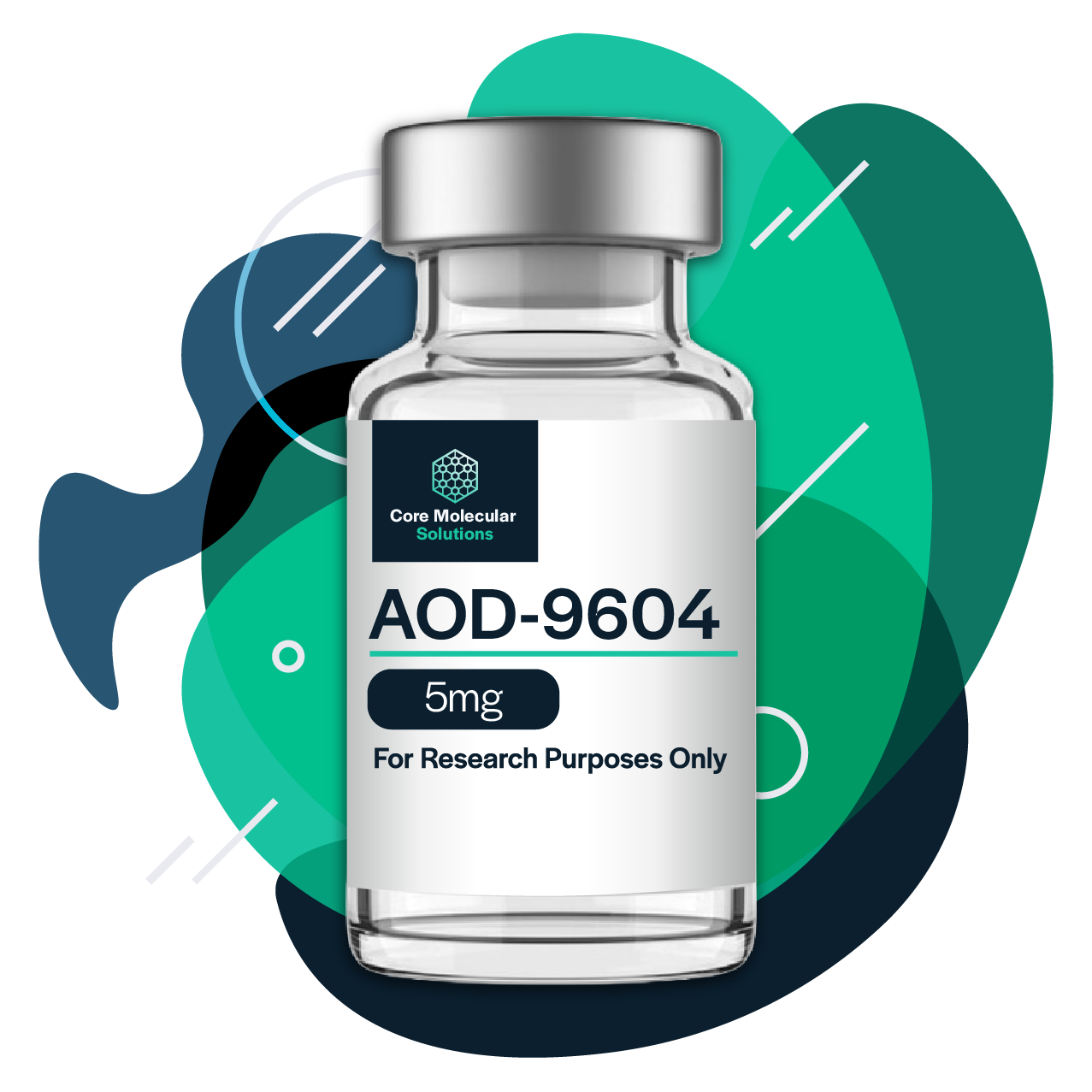
AOD-9604
$100.00
HGH Fragment (177–191) Tyr-Analog · Modified C-Terminal Peptide Fragment
AOD-9604 (Advanced Obesity Drug-9604) is a synthetic 16-amino-acid peptide derived from the C-terminal region of human Growth Hormone (hGH₁₇₇–₁₉₁) with an added N-terminal tyrosine residue. Originally engineered by researchers at Monash University, AOD-9604 isolates the lipolytic properties of native growth hormone while eliminating its somatogenic, diabetogenic, and IGF-1-inducing systemic effects. Preclinical and clinical literature documents its engagement with β₃-adrenergic signaling in adipose tissue, stimulation of lipolysis, inhibition of lipogenesis, and potential applications in cartilage matrix biology without altering glycemic control or serum IGF-1 dynamics.
Description
Overview
AOD-9604 is a modified synthetic 16-amino-acid peptide derived from the C-terminus of human Growth Hormone (hGH₁₇₇–₁₉₁) with an additional N-terminal tyrosine residue. Originally synthesized at Monash University, AOD-9604 was engineered to isolate the fat-metabolizing properties of hGH without altering systemic metabolic markers.
By retaining a functional internal disulfide bridge between Cys⁷ and Cys¹⁴, the peptide interacts with adipose tissue receptors to promote lipolysis and inhibit lipogenesis without elevating serum IGF-1 levels or inducing glucose intolerance.
Key Technical Specifications
| Sequence | YLRIVQCRSVEGSCGF(Tyr-hGH177–191; Cys7–Cys14 disulfide bridge) |
|---|---|
| Molecular Formula | C₇₈H₁₂₃N₂₃O₂₃S₂ |
| Molecular Weight | ~1815.10 g/mol |
| CAS Number | 221231-10-3 |
| In Vivo Half-Life | ~6–23 min (rodent subcutaneous models) |
| Solubility | Bacteriostatic Water / Sterile Water |
| Primary Class | Modified Lipolytic Growth Hormone Fragment |
Biochemical Architecture & Mechanisms
1. Targeted Adipose Tissue Signaling
AOD-9604 acts directly on adipocytes to alter lipid storage dynamics:
- Lipolysis Stimulation: Interacts with β₃-adrenergic receptors to upregulate intracellular lipolytic activity and free fatty acid oxidation.
- Lipogenesis Inhibition: Prevents the metabolic conversion of non-lipid precursors into stored body fat inside white adipose tissue.
2. Absence of Systemic Somatogenic Effects
Because it lacks the amino acid sequences responsible for binding systemic growth hormone receptors:
- IGF-1 Neutrality: Does not stimulate circulating Insulin-like Growth Factor 1 (IGF-1) secretion.
- Glycemic Safety: Demonstrates no adverse impacts on fasting blood glucose levels, insulin sensitivity, or glucose tolerance in research models.
Cartilage Biology Note: Beyond metabolic lipid studies, AOD-9604 has been investigated in joint and cartilage models, exploring potential mechanisms in chondrocyte proliferation and proteoglycan synthesis.
For laboratory research, educational, and analytical reference only. Strictly not for human or veterinary use.
Related products
-
NAD+
Price range: $80.00 through $130.00 Select options This product has multiple variants. The options may be chosen on the product page -
Semaglutide
Price range: $50.00 through $100.00 Select options This product has multiple variants. The options may be chosen on the product page -
Tirzepatide
Price range: $50.00 through $130.00 Select options This product has multiple variants. The options may be chosen on the product page -
Retatrutide
Price range: $150.00 through $200.00 Select options This product has multiple variants. The options may be chosen on the product page