

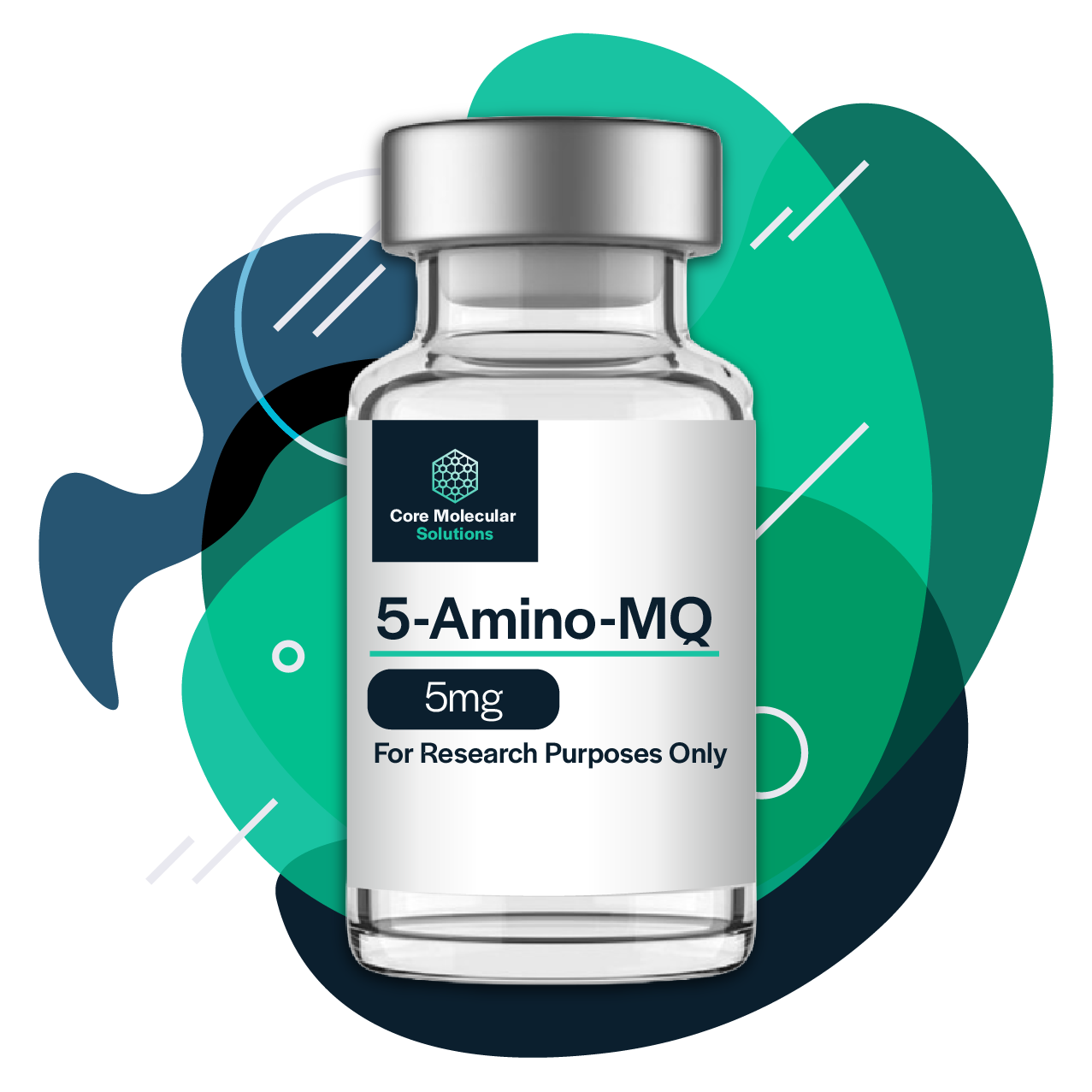
5-AMINO-1MQ
$45.00
Small-Molecule NNMT Inhibitor · 5-Amino-1-Methylquinolinium Salt
5-Amino-1MQ is a membrane-permeable, small-molecule quinolinium derivative that functions as a selective, competitive inhibitor of nicotinamide N-methyltransferase (NNMT). First characterized by researchers at the University of Texas Medical Branch (UTMB) and University of Florida in 2017–2018, 5-Amino-1MQ binds within the NNMT active site, blocking the transfer of methyl groups from S-adenosylmethionine (SAM) to nicotinamide. By suppressing NNMT catalytic activity, 5-Amino-1MQ prevents the depletion of intracellular methyl donors and salvages nicotinamide for conversion back into the NAD⁺ salvage pathway. In preclinical rodent models of diet-induced obesity and metabolic dysfunction, NNMT inhibition via 5-Amino-1MQ has been shown to reduce white adipose tissue accumulation, increase intracellular NAD⁺ concentrations, upregulate SIRT1 activity, and enhance skeletal muscle metabolic energy expenditure.
Supplied at 5mg.
Description
Overview
5-Amino-1MQ (5-amino-1-methylquinolinium) is a cell-permeable small molecule that functions as a selective, competitive inhibitor of nicotinamide N-methyltransferase (NNMT). It is a non-peptidic compound engineered to block the enzymatic breakdown of nicotinamide.
In preclinical research, 5-Amino-1MQ binds within the active site of NNMT to inhibit the transfer of methyl groups from SAM to nicotinamide. This action increases intracellular NAD+ levels, restores methyl-donor pools, stimulates SIRT1 activity, and increases lipid oxidation and energy expenditure in adipocyte and skeletal muscle models.
Key Technical Specifications
| Structure | 5-amino-1-methylquinolinium salt |
|---|---|
| Molecular Formula | C₁₀H₁₁N₂⁺ (cation) / C₁₀H₁₁IN₂ (iodide salt) |
| Molecular Weight | 159.21 g/mol (cation) / ~286.11 g/mol (iodide salt) |
| CAS Number | 42464-96-0 (Iodide salt) |
| Solubility | Water / DMSO |
| Primary Class | Small-Molecule NNMT Inhibitor / Metabolic Modulator |
Biochemical Mechanism & Pathway Dynamics
1. NNMT Active-Site Blockade
By competitively binding NNMT, 5-Amino-1MQ prevents the conversion of nicotinamide into 1-methylnicotinamide (MNA), preserving intracellular S-adenosylmethionine (SAM) levels for essential nuclear epigenetic methylations.
2. NAD+ Salvage & Sirtuin 1 Signaling
- NAD+ Restoration: Rescued nicotinamide enters the NAMPT salvage pathway, causing intracellular accumulation of NAD+.
- Metabolic Acceleration: Increased NAD+ activates SIRT1 deacetylase activity, stimulating mitochondrial respiration and reducing white adipose tissue mass in research models.
Preclinical Literature: Research by Neelakantan et al. (Biochemical Pharmacology, 2018) established that selective NNMT inhibition with 5-Amino-1MQ reduced adipocyte hypertrophy and reversed diet-induced obesity in mouse models without modifying calorie intake.
For laboratory research, educational, and analytical reference only. Strictly not for human or veterinary use.
Related products
-
NAD+
Price range: $80.00 through $130.00 Select options This product has multiple variants. The options may be chosen on the product page -
AOD-9604
$100.00 Add to cart -
Semaglutide
Price range: $50.00 through $100.00 Select options This product has multiple variants. The options may be chosen on the product page -
Tirzepatide
Price range: $50.00 through $130.00 Select options This product has multiple variants. The options may be chosen on the product page