

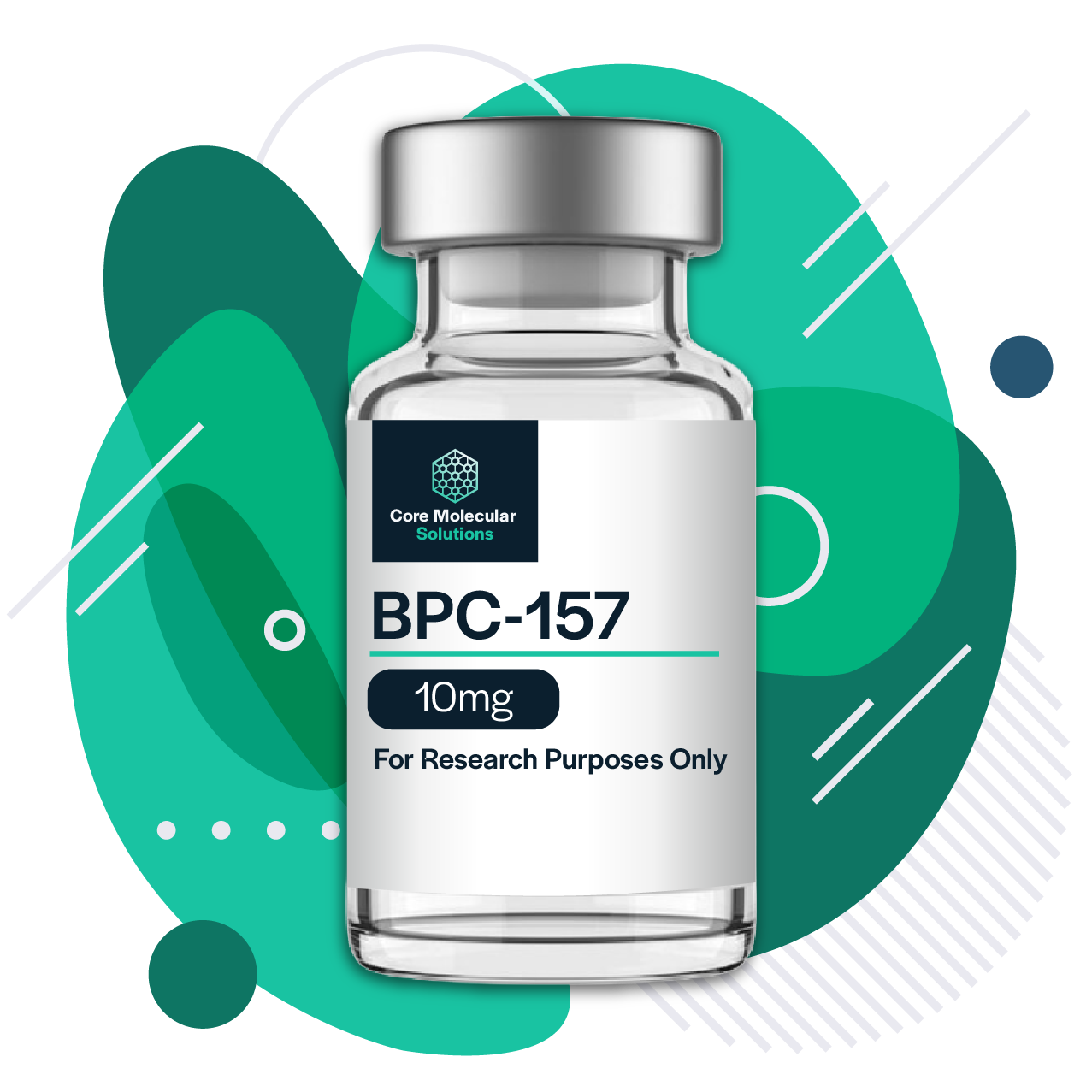
BPC-157
$70.00
Pentadecapeptide · Gastric Body Protection Compound Fragment
BPC-157 (Body Protection Compound-157) is a synthetic 15-amino-acid pentadecapeptide modeled after a biological fragment of human gastric juice protein. Manufactured via solid-phase peptide synthesis (SPPS), BPC-157 exhibits high stability across gastric acid environments and enzymatic degradation profiles. Preclinical research extensively characterizes its involvement in gastrointestinal mucosal integrity, cellular migration, and tissue regeneration mechanisms. Biological studies focus on its upregulation of vascular endothelial growth factor (VEGF), modulation of nitric oxide (NO) signaling pathways, activation of focal adhesion kinase (FAK) and paxillin in fibroblast outgrowth, and tendon-to-bone healing kinetics across in vivo research models.
Supplied at 10mg.
Description
Overview
BPC-157 is a synthetic 15-amino-acid pentadecapeptide derived from a functional fragment of biological human gastric juice protein. Synthesized on solid phase support and lyophilized for research application, BPC-157 retains stability across diverse pH environments.
In preclinical studies, BPC-157 is evaluated for its systemic cytoprotective properties, specifically its role in accelerating soft tissue healing, promoting fibroblast growth, modulating angiogenesis, and protecting mucosal lining structures.
Key Technical Specifications
| Sequence | GEPPPGKPADDAGLV |
|---|---|
| Molecular Formula | C₆₂H₉₈N₁₆O₂₂ |
| Molecular Weight | ~1419.55 g/mol |
| CAS Number | 137525-51-0 |
| In Vivo Half-Life | ~7.9–30 min (rodent models) |
| Solubility | Bacteriostatic Water / Sterile Water |
| Primary Class | Cytoprotective Pentadecapeptide |
Biochemical Architecture & Mechanisms
1. Angiogenic Pathways & Vascular Repair
BPC-157 supports local tissue restoration by facilitating pro-angiogenic cascades:
- VEGF Activation: Promotes upregulation of vascular endothelial growth factor (VEGF) to form new microvascular networks in damaged tissue.
- Endothelial Sprouting: Accelerates blood vessel formation, ensuring oxygen and nutrient delivery to repair zones.
2. Cellular Migration & Connective Tissue Synthesis
Targeted interactions with cell structural machinery enhance tissue remodeling:
- FAK-Paxillin Axis: Phosphorylates focal adhesion kinase (FAK) and paxillin proteins to accelerate cell motility and migration in fibroblasts.
- Extracellular Matrix Support: Stimulates collagen production in tendon, ligament, and muscle research models.
Nitric Oxide Signaling: BPC-157 displays a protective, counter-regulatory effect on nitric oxide synthase (NOS) pathways, helping balance systemic vasodilation and protecting mucosal barrier integrity in gastrointestinal models.
For laboratory research, educational, and analytical reference only. Strictly not for human or veterinary use.
Related products
-
Tirzepatide
Price range: $50.00 through $130.00 Select options This product has multiple variants. The options may be chosen on the product page -
TB-500
$130.00 Add to cart -

Semaglutide
Price range: $50.00 through $100.00 Select options This product has multiple variants. The options may be chosen on the product page -

Retatrutide
Price range: $150.00 through $200.00 Select options This product has multiple variants. The options may be chosen on the product page