

TB-500: What the Research Shows
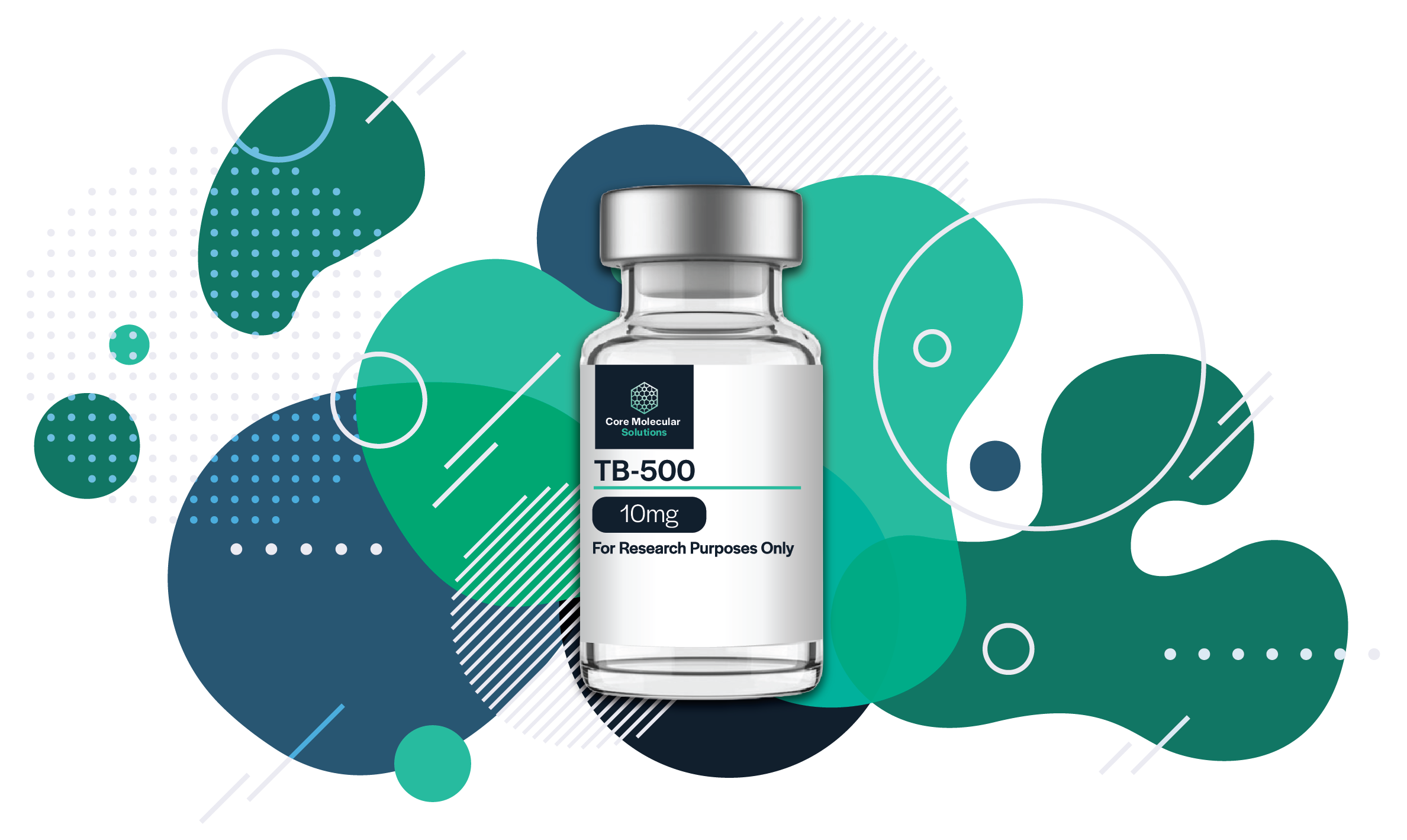
TB-500 is a synthetic peptide derived from Thymosin Beta-4, a naturally occurring protein present throughout the body’s cells. Structurally, TB-500 replicates the active region of Thymosin Beta-4 responsible for binding to actin — the structural protein that gives cells their shape and allows them to migrate. This actin-regulating property is the throughline across most of TB-500’s research, from wound healing to cardiac tissue studies.
Wound Healing and Cell Migration
In a rat full-thickness wound model, researchers found that Thymosin Beta-4 significantly accelerated healing: wound reepithelialization increased by 42% over saline-treated controls at day 4, and by 61% at day 7, alongside measurable increases in collagen deposition and new blood vessel formation (Thymosin beta4 accelerates wound healing, Journal of Investigative Dermatology, 1999).
Gastrointestinal Protection
BPC-157’s origins in gastric juice led to some of the earliest research on the peptide. A foundational 1994 study tested BPC-157 against restraint-stress, cysteamine, and ethanol-induced ulcer models in rats and found it was the only agent, among several reference compounds tested, that was consistently effective across all three models (The beneficial effect of BPC 157 on gastric and duodenal lesions). Later work replicated protective effects on both acute and chronic gastric ulcers using intramuscular and intragastric administration (Protective effects of pentadecapeptide BPC 157 on gastric ulcer in rats), and additional studies extended these findings to NSAID-induced gastrointestinal lesions (Pentadecapeptide BPC 157 positively affects NSAID-induced GI lesions and adjuvant arthritis).
Tissue Remodeling
A follow-up study examined the molecular mechanism behind this effect, focusing on matrix metalloproteinases (MMPs) — enzymes that break down damaged extracellular tissue to make room for new growth. Researchers found that Thymosin Beta-4 substantially increased MMP-2 and MMP-9 activity in dermal wounds within two days of treatment, and traced this effect to the peptide’s actin-binding domain specifically — the same structural region TB-500 was designed to replicate (Thymosin beta4 promotes matrix metalloproteinase expression during wound repair, Journal of Cellular Physiology, 2006).
Cardiac Tissue Research
Some of Thymosin Beta-4’s most notable research comes from cardiovascular science. A study published in Nature found that Thymosin Beta-4 mobilized dormant progenitor cells within the epicardium — the heart’s outer layer — triggering their migration and differentiation into the endothelial and smooth muscle cells that form coronary blood vessels. Researchers identified Thymosin Beta-4 as essential to this process: without it, coronary vessel development was significantly impaired in mouse models (Thymosin beta4 induces adult epicardial progenitor mobilization and neovascularization, Nature, 2007). Related research found that Thymosin Beta-4 treatment following induced myocardial infarction in mice improved early cardiomyocyte survival and measurably improved cardiac function, an effect linked to activation of a specific cell-survival signaling pathway (Akt/PKB).
Proposed Mechanism
Across these studies, researchers point to a few interconnected properties:
- Actin regulation — TB-500’s core structural feature, enabling the cell migration seen across wound-healing and cardiac studies
- Angiogenesis — new blood vessel formation, observed in both dermal and cardiac tissue research
- Progenitor cell mobilization — particularly notable in cardiac research, where Thymosin Beta-4 activated dormant cell populations capable of differentiating into vascular tissue

Current State of the Evidence
The research summarized here is preclinical — conducted in rodent models and cell culture rather than human clinical trials. TB-500 itself (the synthetic fragment) has not been evaluated in published human trials; the studies above involve full-length Thymosin Beta-4.
Explore our TB-500 research product:
View TB-500This overview reflects published preclinical research. Products offered by Core Molecular Solutions are intended for laboratory research purposes only and are not for human or veterinary use.