


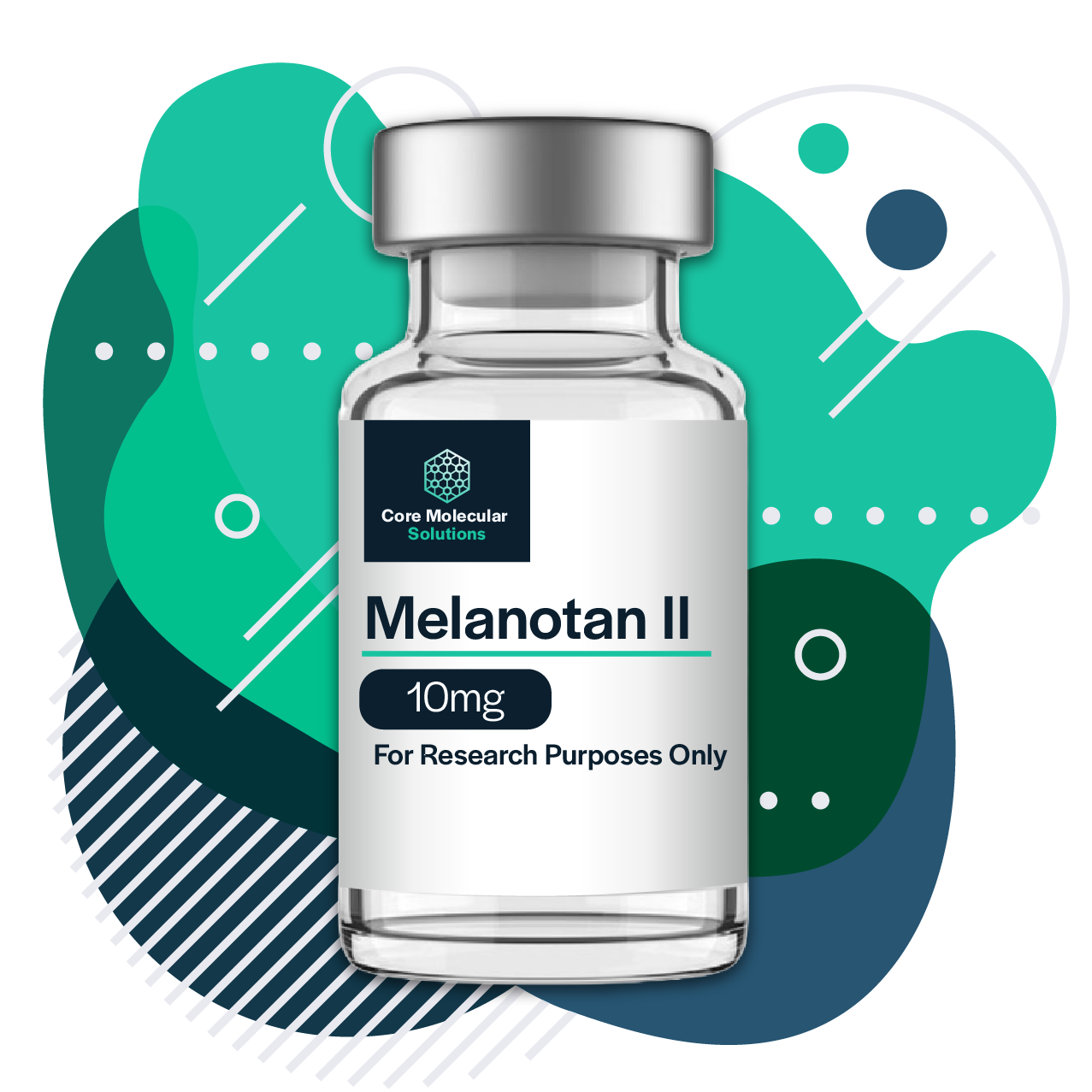
Melanotan II
$70.00
Cyclic α-MSH Analog · Non-Selective Melanocortin Receptor Agonist
Melanotan II (MT-II) is a synthetic, cyclic heptapeptide derivative of natural α-melanocyte-stimulating hormone (α-MSH). Featuring an N-terminal acetylated norleucine (Ac-Nle⁴) substitution, a core D-Phe⁷ chiral inversion, and a lactam ring bridge between Asp⁵ and Lys¹⁰, MT-II was developed at the University of Arizona to significantly enhance metabolic stability and receptor affinity relative to native α-MSH. It functions as a potent, non-selective agonist across central and peripheral melanocortin receptors (MC1R, MC3R, MC4R, and MC5R). Preclinical and literature models evaluate MT-II in melanogenesis signaling, central appetite and metabolic energy regulation (MC4R), and central nervous system (CNS) pathways controlling sexual behavior and autonomic responses.
Supplied at 10mg
Description
Overview
Melanotan II (MT-II) is a synthetic cyclic heptapeptide analog of endogenous α-melanocyte-stimulating hormone (α-MSH). Developed to address the rapid enzymatic breakdown of native linear melanocortin peptides, MT-II incorporates a lactam ring bridge alongside Nle⁴ and D-Phe⁷ amino acid modifications.
In research applications, Melanotan II functions as a potent agonist across melanocortin receptor subtypes (MC1R, MC3R, MC4R, MC5R). It is widely utilized in studies examining melanogenesis signaling, central appetite and metabolic regulation, neurobiological pathways, and cyclic peptide stability dynamics.
Key Technical Specifications
| Sequence | Ac-Nle-cyclo[Asp-His-D-Phe-Arg-Trp-Lys]-NH2 |
|---|---|
| Molecular Formula | C₅₀H₆₉N₁₅O₉ |
| Molecular Weight | ~1024.18 g/mol |
| CAS Number | 121062-08-6 |
| Elimination Half-Life | ~33 minutes (in vivo plasma residence) |
| Solubility | Bacteriostatic Water / Sterile Water |
| Primary Class | Non-Selective Melanocortin Receptor Agonist |
Biochemical Architecture & Receptor Pharmacology
1. Structural Stabilization Chemistry
The covalent side-chain lactam bridge between Asp⁵ and Lys¹⁰ creates a rigid, cyclic β-turn structure. Combined with D-Phe⁷ substitution and terminal capping, this architecture provides significant resistance against cleavage by serum endopeptidases.
2. Melanocortin Subtype Activation Profile
- MC1R Signaling: Stimulates cAMP cascades in melanocytes to upregulate tyrosinase and drive eumelanin synthesis.
- MC3R / MC4R Engagement: Activates central hypothalamic receptors involved in satiety signaling, energy homeostasis, and autonomic pathways.
- MC5R Interactions: Engaged in exocrine gland signaling and peripheral lipid pathway investigations.
Academic Origin: Developed at the University of Arizona in the late 1980s, Melanotan II serves as a foundational reference compound in structure-activity relationship (SAR) literature for cyclic peptide drug design and central melanocortin receptor mapping.
For laboratory research, educational, and analytical reference only. Strictly not for human or veterinary use.
Additional information
| Concentration | 10 mg |
|---|
Related products
-
GHK-Cu
Price range: $50.00 through $80.00 Select options This product has multiple variants. The options may be chosen on the product page -

Glow Blend
$230.00 Add to cart