

GHK-Cu: What the Research Shows
GHK-Cu is a naturally occurring copper complex formed by a tripeptide (glycyl-L-histidyl-L-lysine) that binds strongly to copper ions. First isolated from human plasma in the early 1970s, GHK-Cu levels decline substantially with age. Its research profile centers on wound healing and skin remodeling, largely tied to copper’s role as a cofactor for enzymes involved in collagen formation and stabilization.
Wound Healing and Connective Tissue
Using a rat wound-chamber model — a standard method for studying dermal healing — researchers found that GHK-Cu injections increased both glycosaminoglycan (GAG) and collagen deposition in healing wounds. Separate research using an ischemic wound model found that GHK-Cu accelerated healing while decreasing levels of matrix metalloproteinases (MMP-2 and MMP-9) and a key inflammatory cytokine, suggesting an anti-inflammatory component to its healing effect (Regenerative and Protective Actions of the GHK-Cu Peptide in the Light of the New Gene Data, Pickart & Margolina, International Journal of Molecular Sciences, 2018).
Pilot Data on Skin
A small, early pilot study compared topical creams containing GHK-Cu, vitamin C, melatonin, and tretinoin, applied to skin over one month, evaluating changes in dermal collagen production, epidermal cell turnover, and inflammatory markers via skin biopsy. Researchers found that GHK-Cu, along with the other tested compounds, enhanced dermal collagen synthesis, though the effect was not observed in all participants — the study’s authors were explicit that this was exploratory, pilot-scale work rather than a definitive efficacy trial (Abdulghani et al., Effects of topical creams containing vitamin C, a copper-binding peptide cream and melatonin compared with tretinoin on the ultrastructure of normal skin, Disease Management and Clinical Outcomes, 1998).
Proposed Mechanisms
Research on GHK-Cu points to copper’s role as a biochemical cofactor as central to its effects:
- Collagen cross-linking enzymes — copper is required by lysyl oxidase, an enzyme responsible for stabilizing newly formed collagen fibers
- Extracellular matrix remodeling — GHK-Cu has been shown to influence both the synthesis of matrix components (collagen, elastin, GAGs) and the enzymes that break them down (MMPs), suggesting a role in balancing tissue construction and turnover
- Anti-inflammatory activity — observed alongside wound-healing effects in animal models, though the precise relationship between GHK-Cu’s anti-inflammatory and regenerative actions isn’t fully mapped
Current State of the Evidence
GHK-Cu has one of the longer research histories of any compound discussed on this page — over four decades — but human evidence remains limited to small, early-stage pilot studies rather than large, rigorously controlled clinical trials. GHK-Cu is not FDA-approved as a drug; it is more commonly classified and marketed as a cosmetic ingredient.
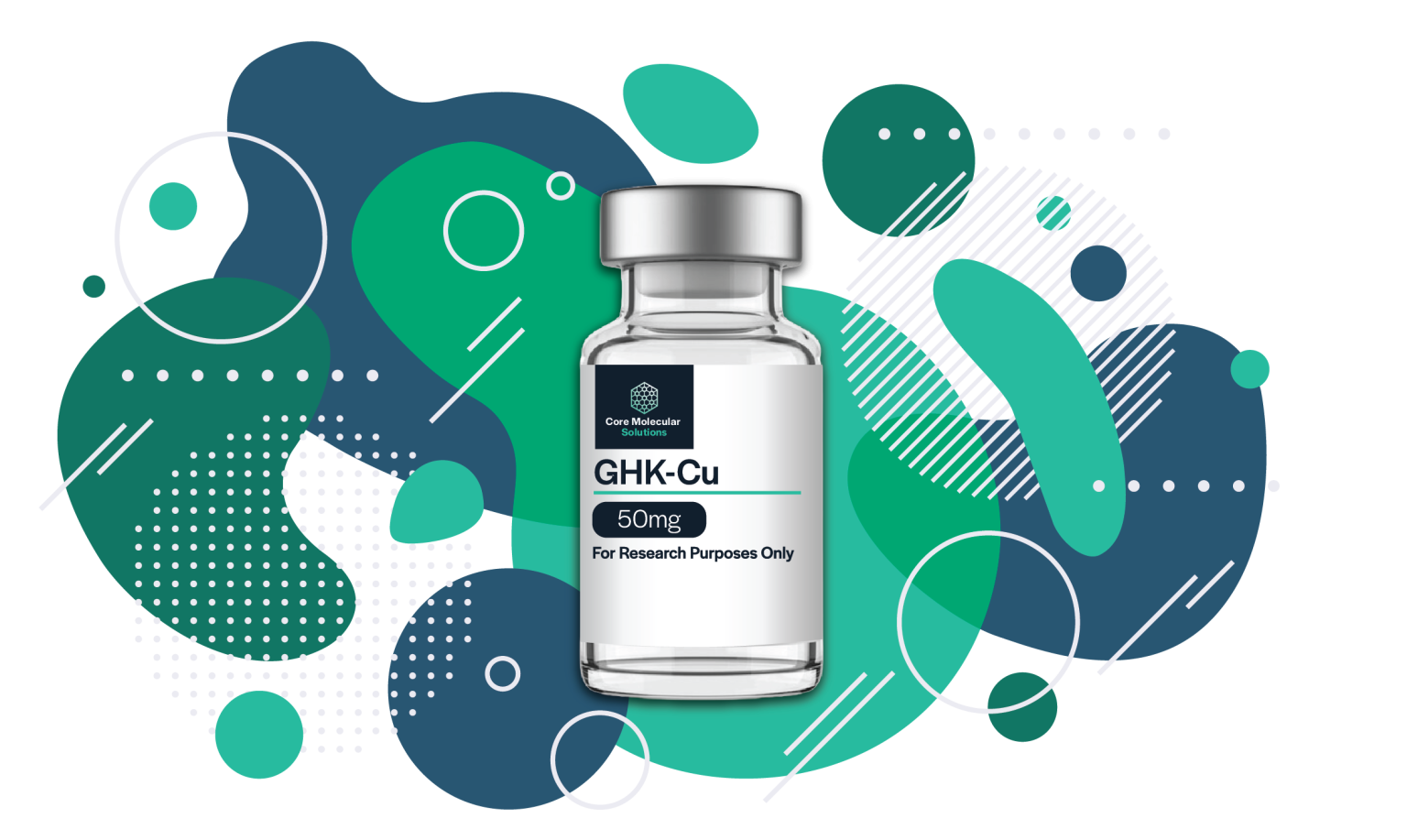
Explore our GHK-Cu Research Product:
View GHK-CuThis overview reflects published preclinical and early-stage clinical research. Products offered by Core Molecular Solutions are intended for laboratory research purposes only and are not for human or veterinary use.