


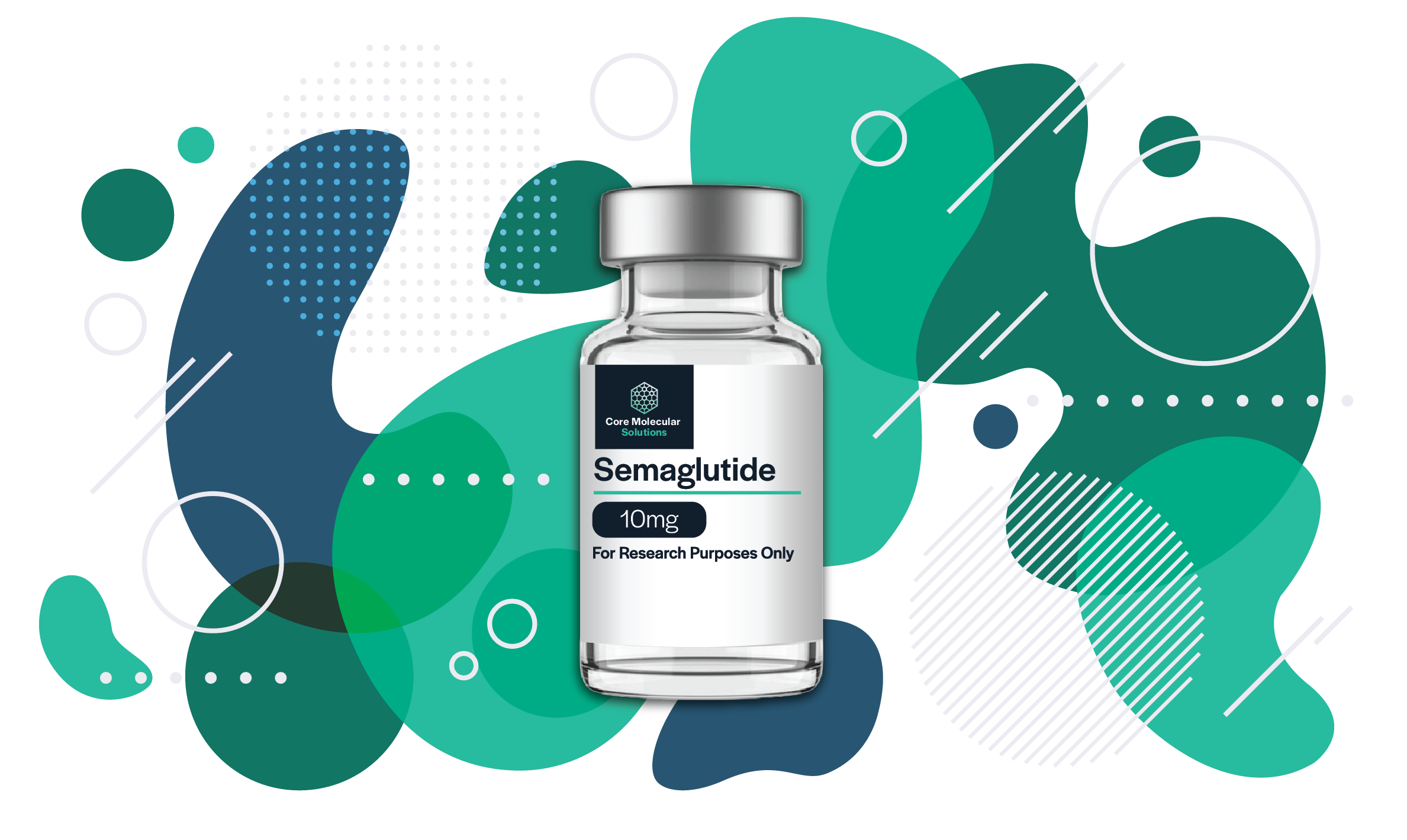
Semaglutide: What the Research Shows
Semaglutide is a long-acting GLP-1 receptor agonist — a synthetic peptide engineered to mimic glucagon-like peptide-1, a naturally occurring hormone involved in insulin secretion, glucagon suppression, and appetite regulation. Its extended half-life (approximately 160 hours) allows for once-weekly dosing, and it has been evaluated across two major clinical trial programs: SUSTAIN, focused on type 2 diabetes, and STEP, focused on weight management.

Glycemic Control
The SUSTAIN program encompassed 13 separate phase 3 randomized controlled trials evaluating subcutaneous semaglutide in people with type 2 diabetes. Across these trials, comparator-adjusted HbA1c reductions ranged from 0.6 to 1.6 percentage points, with semaglutide consistently outperforming placebo and active comparators across the program (Overduin et al., Safety of Semaglutide). SUSTAIN-6, the program’s dedicated cardiovascular outcomes trial, additionally found a 26% reduction in the relative risk of major adverse cardiovascular events.
Weight Management
The STEP clinical trial program evaluated once-weekly 2.4mg semaglutide specifically for weight management. In STEP 1, the pivotal 68-week trial in adults with overweight or obesity, participants receiving semaglutide achieved an average weight loss of 14.85%, compared to 2.41% in the placebo group. Across the broader STEP program, nondiabetic participants saw average weight reductions between 10% and 17%, while participants with type 2 diabetes (STEP 2) saw reductions around 10% — a smaller but still clinically significant effect, consistent with the pattern seen across GLP-1 therapies in diabetic populations (Chen et al., Semaglutide in obesity and type 2 diabetes: A review of clinical trial evidence from the STEP 1–5 program). Longer-term data from STEP 5 found these effects — weight, waist circumference, blood pressure, and HbA1c — were sustained through 104 weeks of continuous treatment.
Weight Management
Semaglutide’s effects are attributed to a single receptor pathway, distinct from dual-agonist peptides like tirzepatide:
- GLP-1 receptor activation promotes glucose-dependent insulin secretion while suppressing glucagon release, supporting glycemic control without a high risk of hypoglycemia
- Delayed gastric emptying slows the digestive process, extending satiety after meals
- Central appetite regulation — GLP-1 receptors are present in brain regions involved in hunger and satiety signaling, and research indicates semaglutide’s weight-loss effect is driven primarily by reduced energy intake through this pathway

Regulatory Status
Semaglutide is FDA-approved under the brand names Ozempic (type 2 diabetes) and Wegovy (chronic weight management), with regulatory approvals obtained between 2017 and 2021. It has one of the most extensive clinical trial programs of any peptide therapy, spanning glycemic control, weight management, and cardiovascular outcomes research.
Explore our Semaglutide research product:
View SemaglutideThis overview reflects published clinical trial research. Products offered by Core Molecular Solutions are intended for laboratory research purposes only and are not for human or veterinary use.