


MOTS-C: What the Research Shows
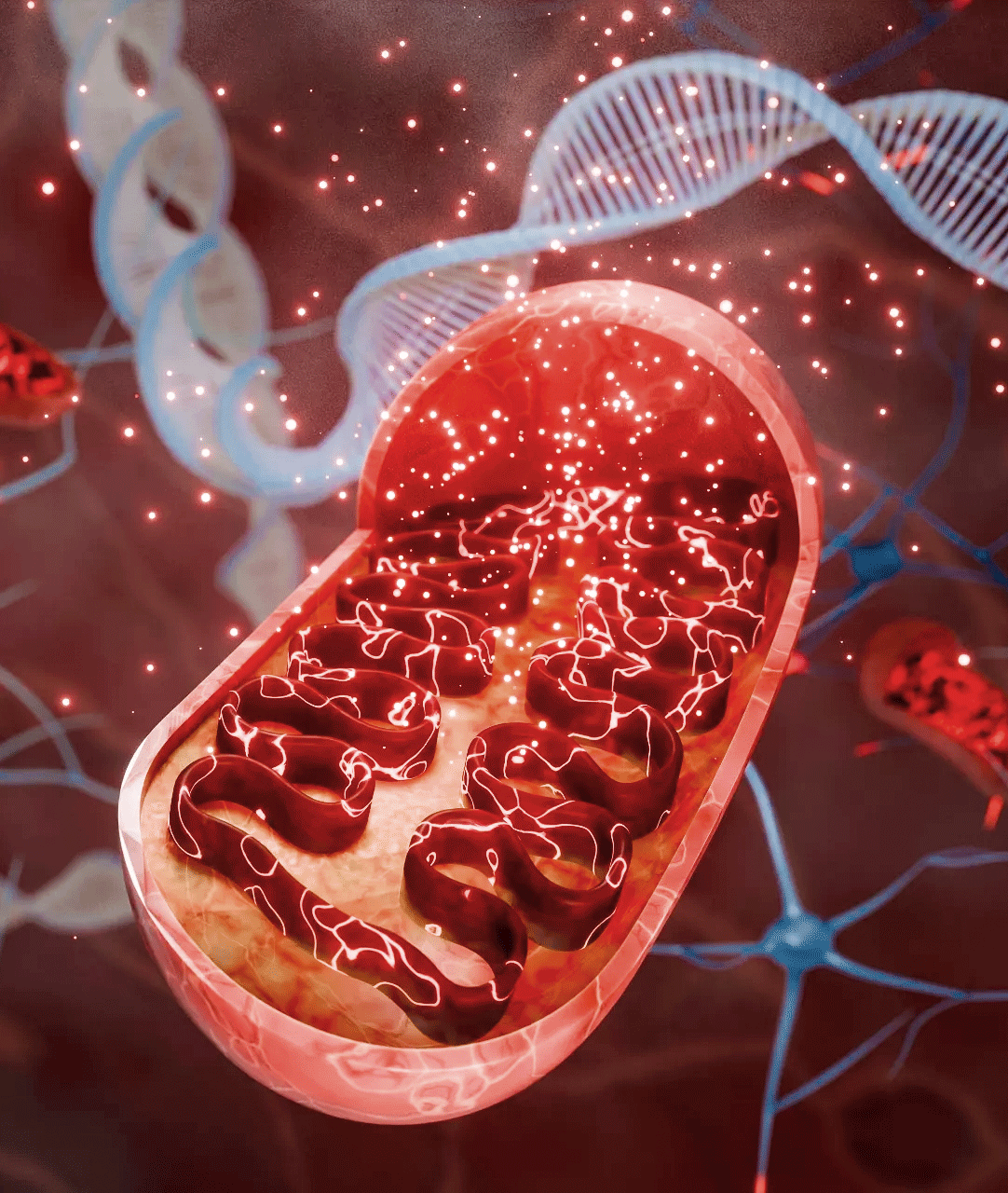
MOTS-C (Mitochondrial Open Reading Frame of the 12S rRNA-c) is a 16-amino-acid peptide with an unusual origin: unlike nearly every other peptide studied for metabolic research, MOTS-C is encoded directly within mitochondrial DNA rather than the cell’s nuclear genome. Discovered in 2015 by researchers at the University of Southern California, it functions as a signaling molecule that communicates from mitochondria to the cell nucleus, adjusting gene expression in response to metabolic stress.
Metabolic Homeostasis
The foundational study characterizing MOTS-C, published in Cell Metabolism, tested the peptide in mice on a high-fat diet designed to induce obesity and insulin resistance. Researchers found that MOTS-C treatment promoted metabolic balance, reduced diet-induced obesity, and reversed insulin resistance. The peptide activated AMPK, a cellular energy-sensing pathway also activated by physical exercise — leading researchers to describe MOTS-C as an “exercise mimetic” (Lee, Zeng, Drew, et al., The mitochondrial-derived peptide MOTS-c promotes metabolic homeostasis and reduces obesity and insulin resistance, Cell Metabolism, 2015).
Exercise Physiology and Aging
A 2021 study published in Nature Communications extended this research in two directions. First, researchers measured MOTS-C levels in human volunteers before and after a bout of exercise, finding a roughly 12-fold increase in skeletal muscle and a 1.6-fold increase in circulating blood levels — evidence that the body naturally produces more MOTS-C in response to physical activity. Second, in mice, researchers administered MOTS-C across young, middle-aged, and old age groups and found it significantly improved physical performance on balance and treadmill tests at every age tested, with the most pronounced improvements in the oldest animals. Late-life-initiated treatment also improved physical capacity in aged mice (Reynolds, Lai, Woodhead, et al., MOTS-c is an exercise-induced mitochondrial-encoded regulator of age-dependent physical decline and muscle homeostasis, Nature Communications, 2021).

Proposed Mechanism
Research points to MOTS-C acting through a few interconnected pathways:
- AMPK activation — the same cellular energy-sensing pathway triggered by exercise, involved in regulating how cells use glucose and fat for fuel
- Retrograde mitochondrial-to-nuclear signaling — under metabolic stress, MOTS-C translocates to the cell nucleus and directly influences gene expression, a distinctive mechanism tied to its mitochondrial origin
- Age-related decline — researchers have observed that endogenous MOTS-C levels decrease with age, an association that has motivated interest in its role in metabolic and physical decline over the lifespan
Current State of the Evidence
It’s worth being clear about where the research stands: the studies above — like most MOTS-C research — are preclinical, based on mouse models and human observational exercise data rather than controlled human treatment trials. No completed human clinical trial testing injected MOTS-C has been published to date.
Explore our MOTS-C research product:
View MOTS-CThis overview reflects published preclinical and observational research. Products offered by Core Molecular Solutions are intended for laboratory research purposes only and are not for human or veterinary use.