


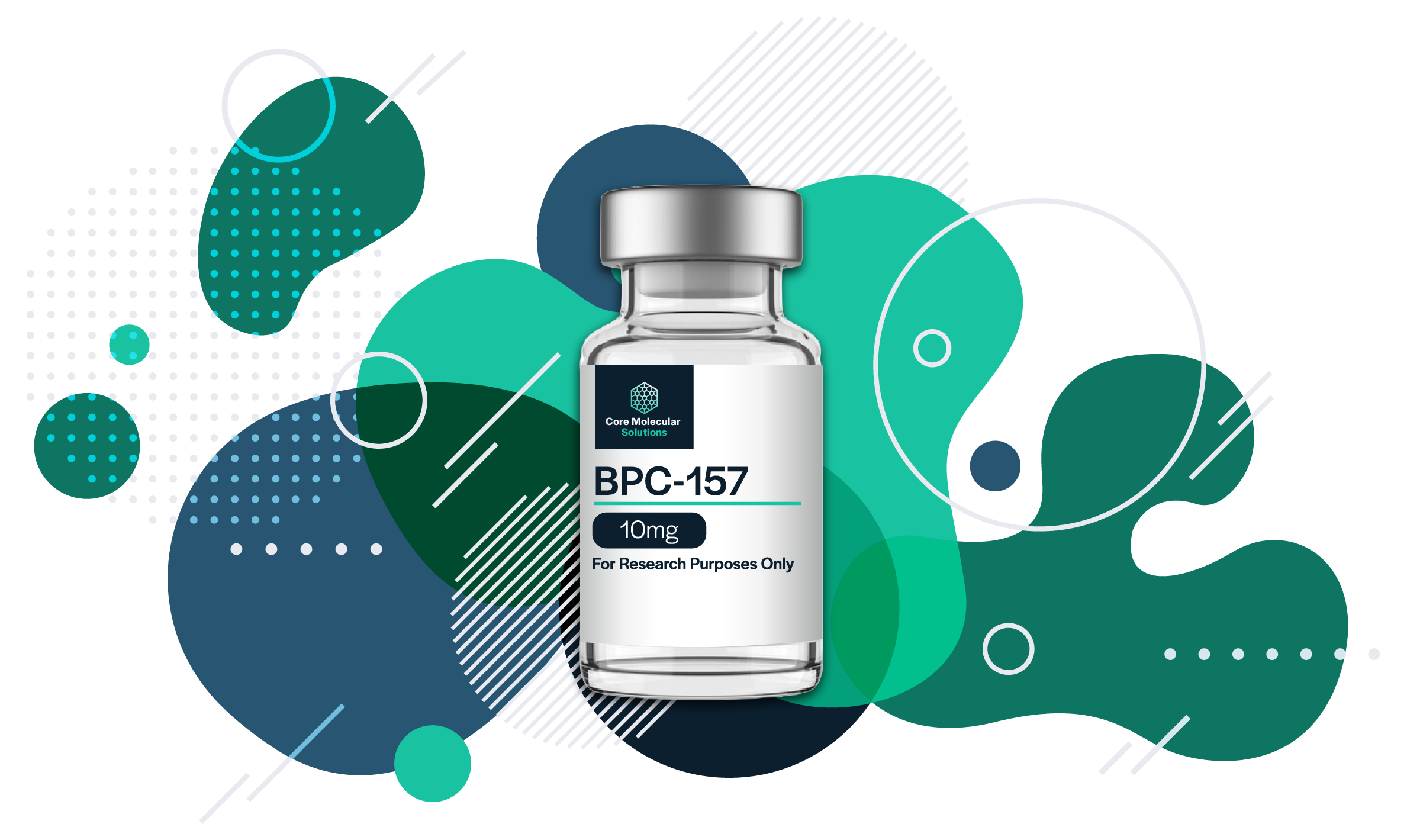
BPC-157: What the Research Shows
BPC-157 (Body Protection Compound-157) is a synthetic pentadecapeptide — a chain of 15 amino acids — originally identified from a naturally occurring compound in human gastric juice. Since its characterization in the early 1990s, it has become one of the most extensively studied peptides in preclinical tissue-repair research, appearing in dozens of animal and laboratory studies spanning tendon, ligament, muscle, and gastrointestinal tissue.
Tendon and Ligament Repair
Much of BPC-157’s research profile centers on connective tissue healing. In a rat Achilles tendon transection model, researchers found that BPC-157 accelerated functional recovery and directly stimulated the growth of tendon cells (tendocytes) in vitro (Gastric pentadecapeptide BPC 157 accelerates healing of transected rat Achilles tendon). A separate study on rat medial collateral ligaments found consistent improvements in functional, biomechanical, and histological healing measures across intraperitoneal, oral, and topical delivery routes (Pentadecapeptide BPC 157 improves ligament healing in the rat).
At the cellular level, researchers at Chang Gung University identified a specific mechanism behind these effects: BPC-157 upregulated growth hormone receptor expression in tendon fibroblasts in a dose- and time-dependent manner, and this upregulation corresponded with increased fibroblast proliferation when growth hormone was introduced (Pentadecapeptide BPC 157 Enhances the Growth Hormone Receptor Expression in Tendon Fibroblasts).

Gastrointestinal Protection
BPC-157’s origins in gastric juice led to some of the earliest research on the peptide. A foundational 1994 study tested BPC-157 against restraint-stress, cysteamine, and ethanol-induced ulcer models in rats and found it was the only agent, among several reference compounds tested, that was consistently effective across all three models (The beneficial effect of BPC 157 on gastric and duodenal lesions). Later work replicated protective effects on both acute and chronic gastric ulcers using intramuscular and intragastric administration (Protective effects of pentadecapeptide BPC 157 on gastric ulcer in rats), and additional studies extended these findings to NSAID-induced gastrointestinal lesions (Pentadecapeptide BPC 157 positively affects NSAID-induced GI lesions and adjuvant arthritis).
Proposed Mechanisms
Across this body of research, several recurring biological mechanisms have been proposed to explain BPC-157’s effects:
- Angiogenesis — the formation of new blood vessels — supporting oxygen and nutrient delivery to healing tissue
- Fibroblast activity and collagen organization, central to rebuilding tendon and ligament structure
- Growth hormone receptor signaling, shown to increase in BPC-157-treated tendon cells
- Nitric oxide system modulation, implicated in both vascular and gastrointestinal effects
Safety Research
A multi-species preclinical toxicology program — covering mice, rats, rabbits, and dogs — reported no serious toxicity findings across single-dose and repeat-dose testing (Toxicological study of BPC-157). This research reflects outcomes observed in animal models and does not constitute an established human safety profile.

Explore our BPC-157 research product:
View BPC-157This overview reflects published preclinical and laboratory research. BPC-157 has not been evaluated by the FDA and is not approved for human or veterinary use. Products offered by Core Molecular Solutions are intended for laboratory research purposes only.